Maximizing Efficiency with AI Automation Solutions: Save Time, Reduce Costs, and Scale Your Business
AI Automation Solutions
Artificial Intelligence (AI) automation solutions represent a transformative approach for businesses seeking to enhance operational efficiency and reduce costs in an increasingly competitive landscape. By leveraging machine learning algorithms and AI technologies, organizations can automate routine tasks, streamline processes, and optimize workflows, resulting in significant time savings and improved accuracy.
In essence, AI automation entails the use of intelligent systems that can emulate human tasks with greater precision and speed. This includes capabilities such as data entry, customer service interactions, inventory management, and more. As processes become automated, businesses can focus more on strategic initiatives rather than getting bogged down by repetitive functions.
The significance of AI automation solutions cannot be overstated. Today's businesses must navigate rapidly changing markets and consumer demands, necessitating a more agile and responsive operational framework. By adopting AI tools, companies can achieve a higher level of scalability. For example, customer engagement can be enhanced through automated chatbots that can handle inquiries 24/7, allowing human staff to concentrate on more complex issues. This shift not only improves customer satisfaction but also reduces labor costs associated with traditional customer service.
Furthermore, AI solutions can analyze vast amounts of data to provide valuable insights into trends and potential areas for improvement. By automating data analysis, businesses can make informed decisions more quickly, thus maintaining a competitive edge. In conclusion, the integration of AI automation solutions is essential for companies aspiring to thrive, as it fundamentally changes how they operate and responds to the dynamic nature of their industries.
Key Benefits of Implementing AI Automation
Implementing AI automation tools such as n8n and Zapier unlocks numerous advantages for businesses, enhancing their operational efficiency significantly. One of the most prominent benefits is time savings. By automating routine tasks, businesses can avoid the repetitive nature of manual processes, thereby allowing employees to focus on higher-value activities. For instance, automating data entry or lead generation can free up hours of work that can be redirected towards strategic planning or customer engagement initiatives.
Another critical benefit is cost reduction. Automation minimizes the likelihood of human error which can lead to costly mistakes. Tools like n8n and Zapier streamline workflows and provide real-time updates without the need for constant manual oversight, lowering operational costs. As organizations optimize their processes through AI automation, they can leverage resources more efficiently, leading to an overall reduction in overhead expenses.
Furthermore, scalability is significantly enhanced with the implementation of AI automation. As businesses grow, the volume of tasks and data increases, making it challenging to maintain the same level of efficiency. AI tools can scale operations seamlessly; for example, a company utilizing Zapier can integrate multiple applications and automate workflows that accommodate increasing demands effortlessly. This scalability enables businesses to expand their operations without the proportional increase in costs or workforce.
Examples of successful AI integration abound among leading organizations. For instance, e-commerce businesses have reported that employing AI automation can expedite order processing and improve customer satisfaction rates. Moreover, marketing firms utilizing n8n have enhanced their campaign management efficiency, thereby maximizing ROI. The implementation of AI automation tools not only supports current business needs but also positions organizations favorably for future growth.
Understanding n8n and Zapier: Choosing the Right Tool for Your Business
In the world of automation, n8n and Zapier have emerged as two dominant players, each offering unique functionalities and features tailored to different business needs. Understanding the distinctions between these two platforms is crucial for organizations aiming to enhance their automation strategies effectively.
Zapier is renowned for its user-friendly interface and extensive library of integrations, making it a popular choice for businesses that prioritize ease of use. It connects a wide array of applications, enabling seamless workflows with minimal technical knowledge. For businesses seeking quick solutions without delving into code, Zapier is often the go-to tool. However, this simplicity comes with a trade-off; users may encounter limitations in customizability and flexibility when dealing with more complex automation scenarios.
On the other hand, n8n offers a higher degree of customization and control. It is an open-source tool that allows developers to create intricate automation workflows tailored to specific business processes. With a visual programming interface, users can design custom workflows, making it ideal for organizations with unique operational needs. n8n supports self-hosting, providing businesses with greater data privacy and control over their automation processes. This can be particularly important for enterprises handling sensitive information or those that prefer not to rely on third-party servers.
The choice between n8n and Zapier ultimately depends on your organization’s specific requirements. If your focus is on straightforward integrations with a quick setup, Zapier may be more suitable. Conversely, if you are looking for a powerful, customizable tool that can adapt to complex workflows and technical needs, n8n could be the better option. Therefore, assessing your business goals and automation objectives plays a vital role in making an informed decision.
Custom AI Agents: Tailoring Automation to Your Needs
As businesses continue to adopt artificial intelligence (AI) solutions to enhance operational efficiency, the demand for custom AI agents has seen a significant rise. These tailored agents enable organizations to automate processes in a way that aligns specifically with their unique requirements. Custom AI agents can optimize diverse functions such as lead generation, customer relationship management (CRM), and customer interaction, driving productivity and ensuring a better fit for the company’s objectives.
For instance, in lead generation, custom AI agents can be programmed to analyze customer data, identifying patterns and preferences that assist in targeting potential clients more effectively. By leveraging advanced algorithms, a business can create a system that continuously refines its approach to locating and nurturing leads, thereby maximizing conversion rates. This level of personalization, driven by custom automation technology, ensures that the right message reaches the right audience at the optimal time.
Furthermore, when it comes to CRM automation, these bespoke AI solutions can simplify complex tasks such as data input, contact management, and follow-up scheduling, which can often burden traditional systems. By integrating AI with existing CRM tools, organizations can significantly reduce human error and free up valuable resources, allowing personnel to focus on strategic initiatives rather than administrative tasks.
Moreover, custom AI agents excel in enhancing customer interactions. Chatbots tailored to the specific style and tone of a brand can provide immediate responses and efficient service, enhancing user experience while collecting pertinent feedback for continual improvement. This capability not only streamlines customer service but also strengthens client relationships by ensuring that interactions remain consistent and aligned with company values.
In conclusion, custom AI agents present a transformative opportunity for businesses looking to harness the potential of automation. By addressing specific needs in lead generation, CRM, and customer engagements, these tailored solutions can significantly enhance overall operational efficiency and propel business growth.
Real-world Applications: From Lead Generation to CRM Automation
AI automation solutions are transforming various business functions, significantly enhancing efficiency and productivity. One of the primary applications is in lead generation. Businesses can deploy AI-driven tools to sift through vast datasets, identifying potential leads more effectively than human counterparts. These tools can analyze customer behavior, demographics, and engagement metrics, providing insights that help sales teams target their outreach more strategically. By automating this initial stage, businesses can focus their resources on nurturing qualified leads rather than spending excessive time compiling and researching contacts.
In addition to lead generation, AI automation is substantially improving Customer Relationship Management (CRM) tasks. AI-powered CRM systems can automate repetitive tasks, such as data entry, follow-up email sequencing, and customer inquiries. For instance, chatbots equipped with natural language processing can handle basic customer interactions, allowing human agents to devote their time to more complex issues. This level of automation not only increases the speed of response but also enhances customer satisfaction by ensuring timely communications.
Moreover, AI solutions can be employed to create efficient workflows that operate continuously, allowing businesses to maintain a steady flow of operations around the clock. By integrating AI systems, organizations can establish automated processes for document management, lead tracking, and performance reporting, thus reducing operational overhead. For example, a marketing automation tool can synchronize with a CRM to launch targeted campaigns based on user engagement data in real-time, ensuring that marketing strategies are both dynamic and responsive to changing customer behaviors.
Through these applications, it becomes evident that AI automation solutions facilitate not only cost reduction but also scaling opportunities by streamlining essential business processes, ultimately leading to increased productivity and competitive advantage.
Building AI Chatbots and Voice Agents: Enhancing Customer Experience
The integration of AI chatbots and voice agents into customer service frameworks has revolutionized how businesses interact with their clients. These automation solutions serve not only to streamline customer inquiries but to also provide personalized assistance around the clock. By leveraging natural language processing (NLP) and machine learning technologies, organizations can develop chatbots and voice agents that understand and respond to customer requests with remarkable accuracy.
Firstly, AI chatbots can handle a wide array of tasks, from answering frequently asked questions to facilitating complex transactions, all while significantly reducing the operational costs associated with traditional customer service methods. The availability of such tools allows businesses to provide immediate responses to inquiries, leading to enhanced customer satisfaction. In fact, many consumers now expect quick, efficient service, and companies that fail to implement AI tools may find themselves at a competitive disadvantage.
Voice agents, on the other hand, introduce an additional level of engagement by allowing customers to interact using speech. This offers a more intuitive user experience, as customers can converse naturally, further enhancing the sense of connection with the brand. The increasing popularity of voice-activated devices indicates a notable shift in consumer preferences, suggesting that businesses must adapt to this trend by incorporating effective voice solutions.
Ultimately, the deployment of AI chatbots and voice agents not only cuts handling time but also enables businesses to gather valuable data regarding customer interactions. This data can be analyzed to identify trends, customer preferences, and potential areas for improvement. Therefore, investing in AI-driven customer experience tools is essential for those looking to effectively scale operations and enhance service delivery.
Getting Started: How to Order Your AI Automation Solutions
Embarking on the journey to implement AI automation solutions can seem daunting, but with a structured approach, it can be streamlined effectively. The first step is to identify your specific automation needs. This could involve improving repetitive tasks, enhancing customer interaction, or even optimizing data analysis. Clearly defining your goals will help you communicate your requirements more effectively when seeking professional services.
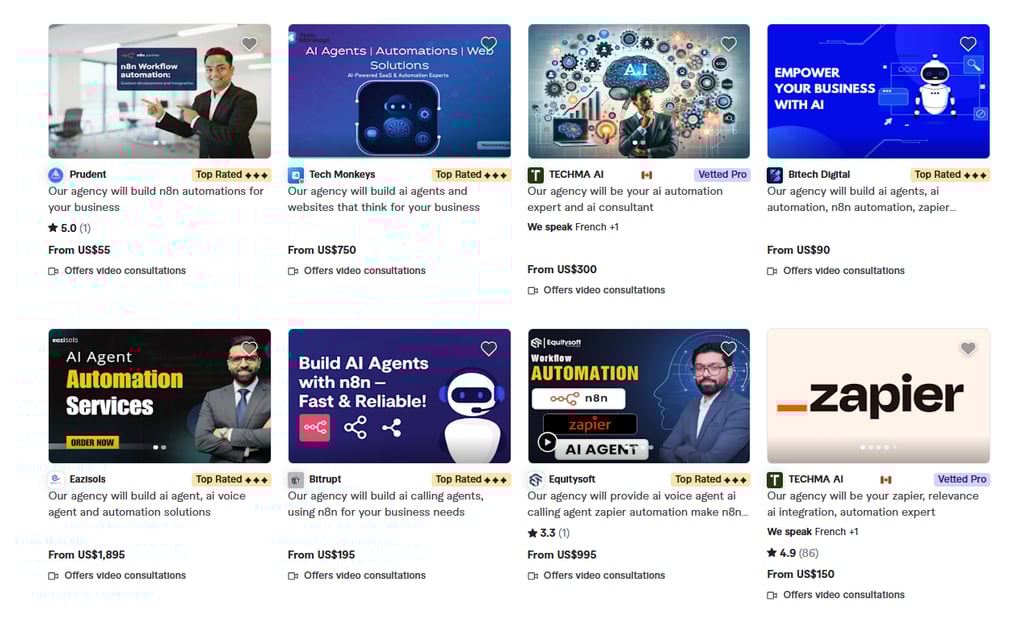
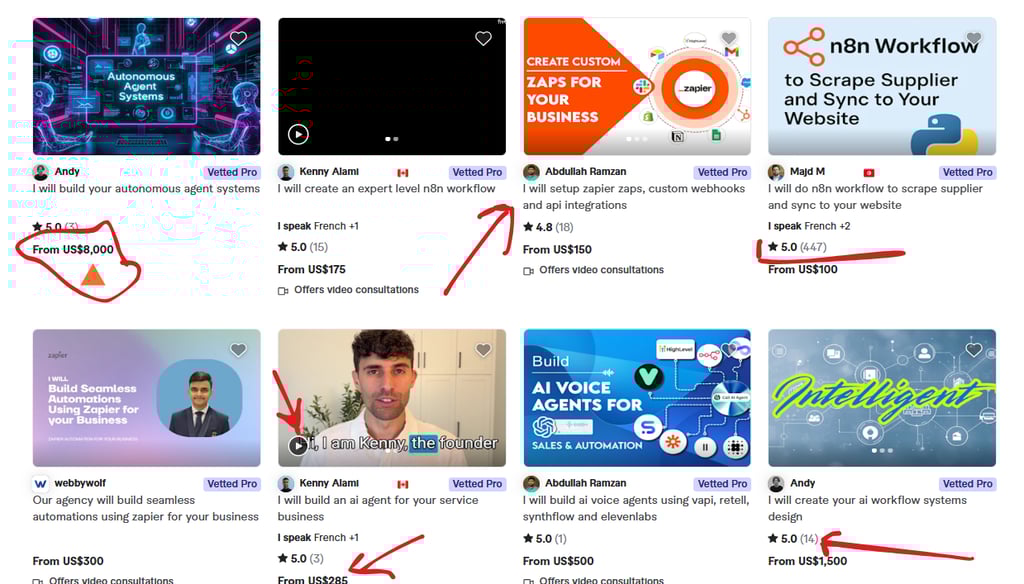
Fiverr is an excellent platform to find experienced professionals specializing in AI automation. Once you have pinpointed your needs, create an account on Fiverr if you haven’t already. Browse through the extensive range of services offered, which include AI chatbot development, automated workflow creation, and machine learning implementation. Utilize the search bar and various filters to narrow down potential freelancers based on area of expertise and customer ratings.
It is crucial to evaluate the profiles of the professionals you're considering. Look for ratings, reviews, and examples of previous work to gauge their skills and suitability for your project. Once you find a freelancer whose qualifications align with your requirements, you can initiate a conversation. Discuss your project goals, timeframe, and budget to ensure both parties have a mutual understanding of expectations.
After finalizing the details, you can place an order through Fiverr. Make sure to choose the package that best fits your specifications. Payment options on the platform are convenient and secure, providing both you and the freelancer peace of mind. Effective communication during the execution phase will facilitate a smooth workflow, ensuring that the final deliverables meet your automation needs.
By following these structured steps, you’ll be well on your way to enhancing your business operations through AI automation solutions and achieving significant time and cost savings.